Link building has changed but many strategies haven’t. What once worked to boost rankings can now quietly damage your site’s authority.
Today, effective link building strategies are less about chasing backlinks and more about earning relevance, trust, and editorial value.
Search engines have become far better at judging context, intent, and quality, which means shortcuts carry real risk. This guide breaks down how modern, safe link building actually works—and how to build authority that lasts, not rankings that disappear.
What Link Building Really Means Today
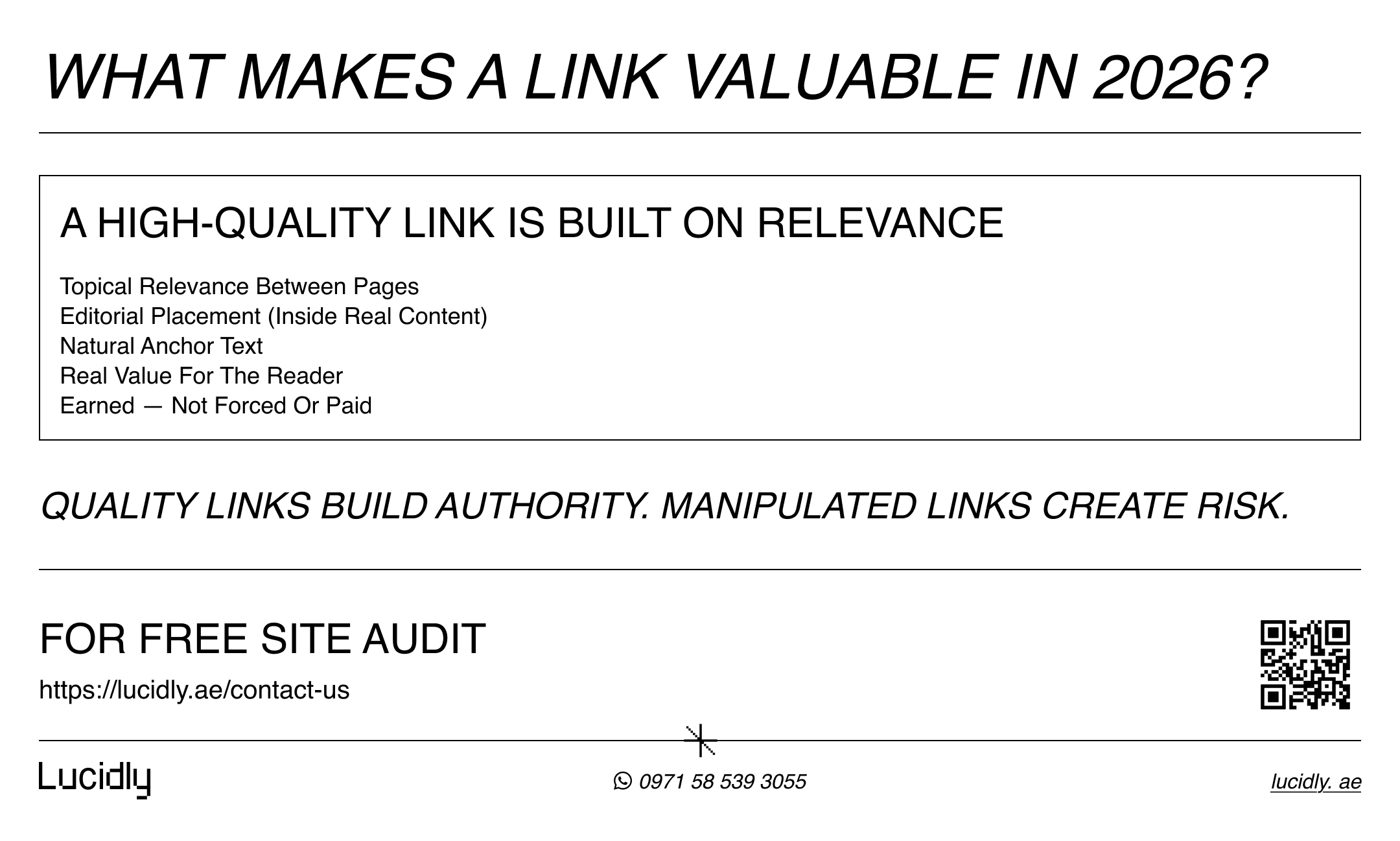
Link building isn’t just “getting backlinks.” It’s the process of earning mentions and links that make sense in context—because they genuinely help a reader discover something useful. Modern backlink strategies work when the link is relevant, editorial, and placed naturally inside real content.
Think of link acquisition as reputation-building, not a numbers game. If your links don’t match the page topic, feel forced, or rely on overly-optimised anchor text, they stop working—and may become a liability.
Why Safe, White-Hat Links Are the Only Sustainable Option
Search engines don’t penalise websites for building links—they penalise them for manipulating signals.
That’s why safe link building focuses on relevance, intent, and genuine editorial placement. White hat link building aligns with how Google expects links to appear: earned naturally, placed where they add value, and surrounded by related content.
Over time, this approach builds authority steadily, instead of triggering algorithmic filters or manual actions that can suppress rankings or remove trust from a site.
LEARN MORE ABOUT: How Search Engines works with our guide.
Link Building for Beginners: Where to Start (and What to Avoid)
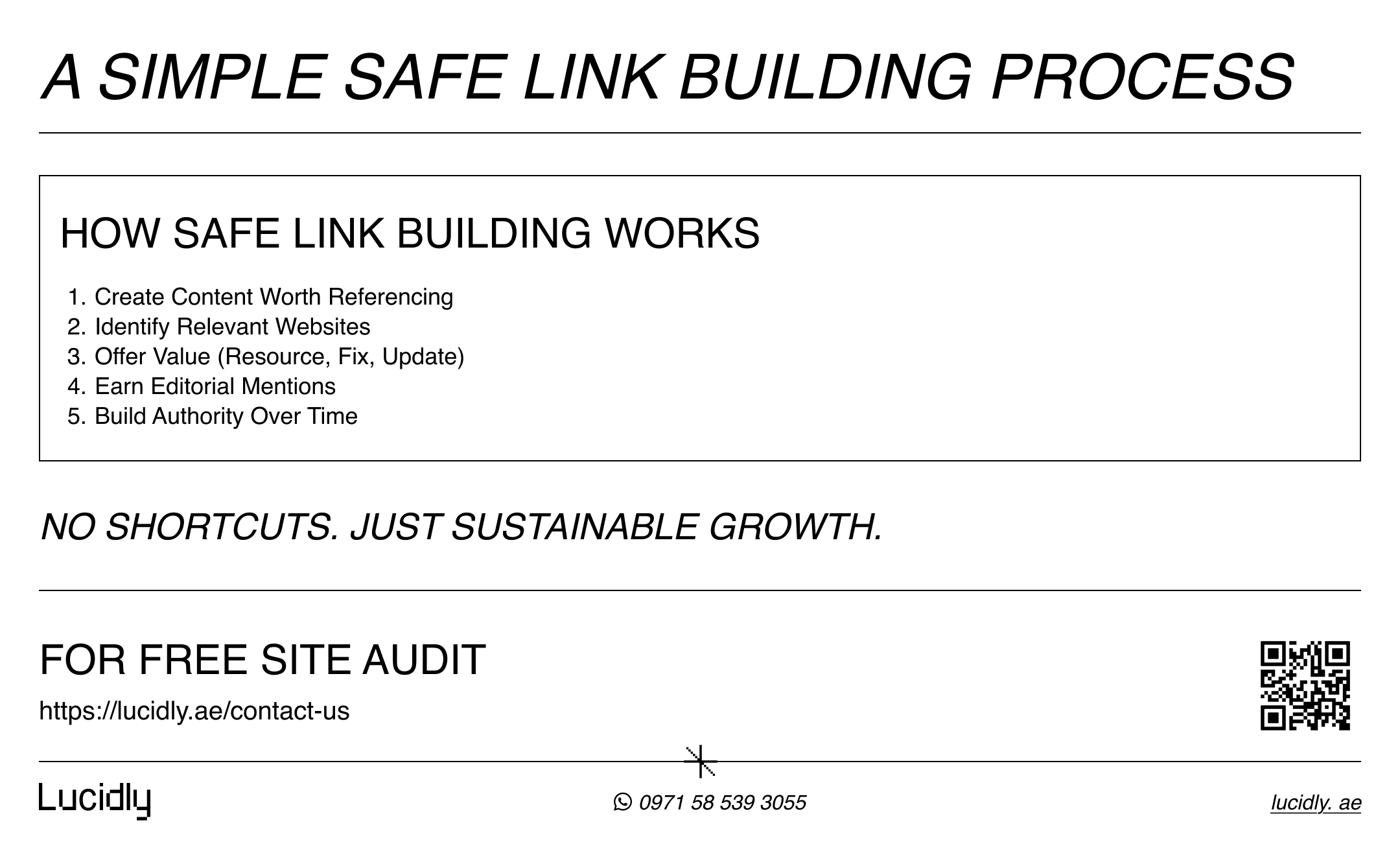
If you’re new to link building, the fastest way to get results is to stop thinking in “tactics” and start thinking in “signals.” Good links usually follow good pages—pages that deserve to be referenced.
Start here (the safe foundation):
Make sure each page targets one clear topic and answers the intent fully.
Strengthen internal linking so your best pages are easy to discover and support each other.
Build a short list of relevant websites that already mention similar content (your realistic targets).
Create one “linkable” asset: a checklist, comparison, mini-study, template, or original examples.
Track what you earn and why—so you repeat what works, not what’s noisy.
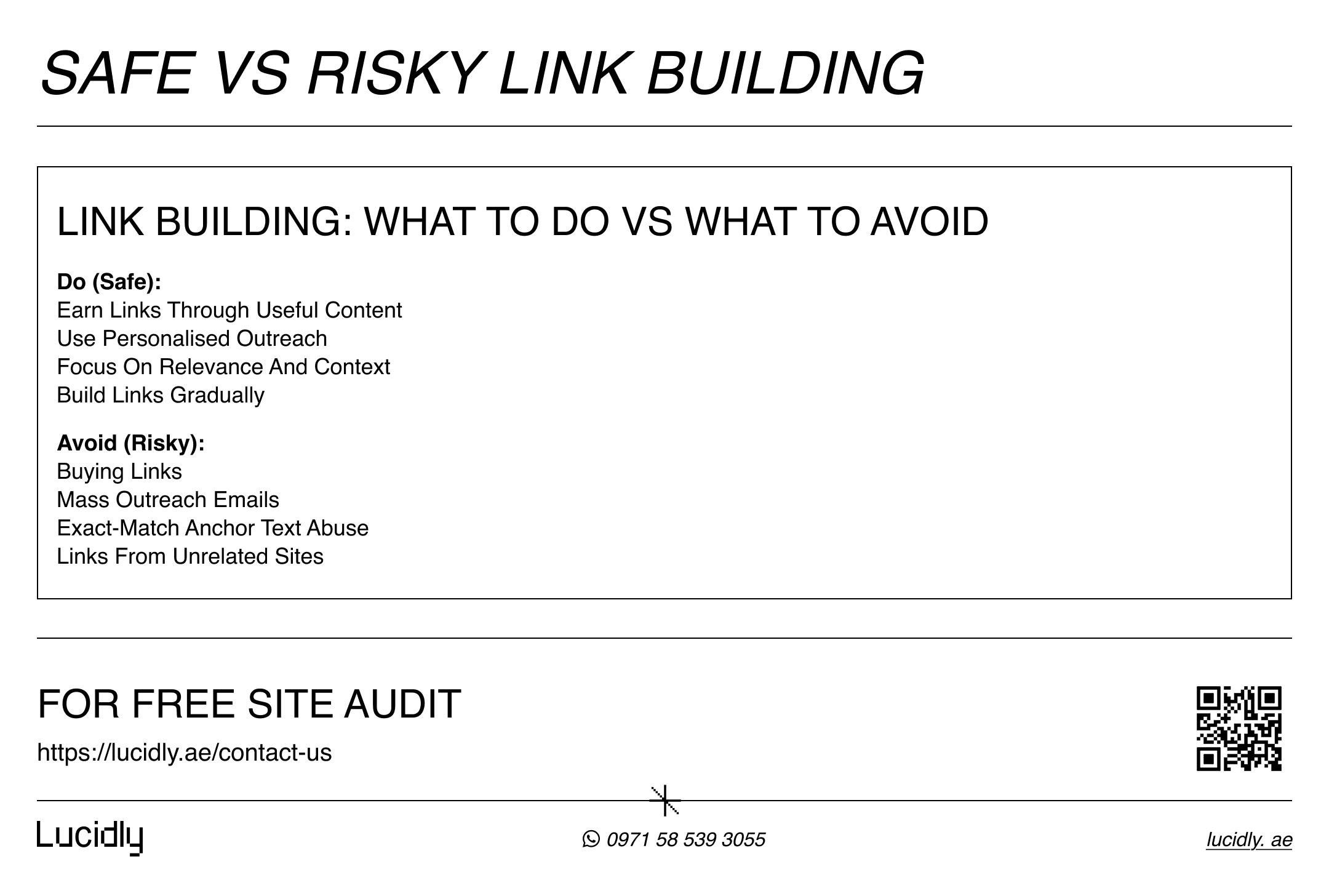
Avoid these beginner mistakes:
Buying links or paying for placements without clear disclosure.
Spamming directories, comment sections, or low-quality forums.
Sending generic outreach emails to hundreds of sites.
Forcing exact-match anchor text repeatedly (it looks manufactured).
Chasing random backlinks from irrelevant pages (low value, higher risk).
The goal isn’t to “get backlinks.” It’s to earn relevant, editorial links that make sense to a human reader.
To learn more about tracking the right SEO metrics and improving organic conversions, talk to our Professional SEO company.
Proven Tactics That Actually Earn Links
Sustainable links are rarely the result of tricks—they’re the byproduct of value. The most reliable approaches focus on solving a problem or adding something useful to an existing conversation.
Tactics that consistently earn links:
Publishing in-depth resources that explain a topic better or more clearly than what already exists.
Guest posting with the goal of contributing expertise, not just securing a link placement.
Identifying broken link opportunities and offering a relevant, high-quality replacement.
Creating original examples, data points, or frameworks that others can reference.
Updating outdated content and making it worth linking to again.
What these methods have in common is intent: they make sense editorially, fit the page context, and earn links naturally without manipulation.
Link Building Outreach Without Spam or Penalties
Link building outreach fails when it’s treated like a numbers game. If you email 200 websites with the same template, most will ignore you—and even if you get links, they often look forced. Good outreach is simple: contact fewer sites, but with a stronger reason.
What effective outreach looks like:
You choose websites that are topically relevant to your page (link relevance first).
You reference a specific page they published (not “Hi, I love your blog”).
You offer a clear fit: a missing resource, an updated source, or a better explanation.
You keep outreach emails short, personal, and useful.
What makes outreach risky or ineffective:
Copy-paste templates sent at scale.
Asking for a link without adding value.
Pushing exact-match anchor text.
Targeting unrelated sites just to “get backlinks.”
How Backlinks help you rank? here’s the answer with our guide about: OFF-PAGE SEO and Authority.
How Many Backlinks Do You Really Need?
There’s no “magic number” of backlinks that guarantees rankings—because Google doesn’t reward volume on its own.
What matters is how your link profile compares to the pages already ranking for the same query, and whether your links are genuinely relevant. In many cases, a few strong links from credible, topically aligned pages outperform dozens of weak ones.
The more competitive the keyword, the more authority you’ll typically need—but the safest way to think about it is this: earn links until your page looks like a trustworthy result in that specific niche.
Buying Links, Penalties, and Common Misconceptions
Buying links is often framed as a shortcut—but in practice, it creates long-term risk. Paid links usually leave patterns: unnatural placement, repeated anchor text, or sites linking out to everything.
Even when penalties don’t happen immediately, these links are often discounted over time, meaning they stop passing value.
Sustainable link building focuses on earning links editorially, where the mention exists because it makes sense to the content—not because it was purchased. The cost of cleanup and recovery almost always outweighs any short-term gain.
FAQ
What is link building in SEO?
Link building in SEO is the process of earning links from other websites to your pages. These links act as signals of trust and relevance, helping search engines understand which content deserves visibility.
What are safe link building strategies?
Safe strategies focus on earning links naturally through relevant content, editorial mentions, and genuine outreach—without manipulation, automation, or paid schemes.
How many backlinks do I need?
There’s no fixed number. The right amount depends on your competition, niche, and page quality. A few strong, relevant links often outperform many weak ones.
Is buying links a good idea?
No. Buying links creates detectable patterns and long-term risk. Even if penalties don’t happen, paid links are often ignored by search engines over time.
Building Authority That Lasts
Strong link building strategies aren’t built on volume or shortcuts—they’re built on relevance, trust, and consistency. When links are earned because they add value, they strengthen authority over time instead of creating hidden risks.
The safest approach is also the most effective: focus on quality content, meaningful relationships, and links that make sense in context.
That’s how you build a link profile that survives updates, competition, and long-term growth.
Contact us for a website evaluation—message Lucidly on WhatsApp and we’ll pinpoint the on-page issues holding your pages back.