Building a successful online store goes far beyond design and product listings. Ecommerce web development is the foundation that determines how well your store performs, scales, and converts visitors into customers.
From speed and security to payments and mobile experience, the right development choices directly impact revenue and trust—especially in competitive markets like the UAE.
This guide breaks down the key features every e-commerce website needs, with practical insights to help businesses build stores that are fast, secure, and ready to grow.
Message Lucidly on WhatsApp for an ecommerce technical audit—so you can uncover performance, checkout, and security issues before they impact sales.
What Is Ecommerce Web Development?
Ecommerce web development refers to the process of building, optimising, and maintaining online stores that allow users to browse products, make payments, and manage orders securely.
It combines front-end experience, back-end logic, integrations, and infrastructure to support real-world business operations.
Unlike standard websites, e-commerce platforms must handle:
Transactions and payments
User accounts and data security
Inventory and order management
High traffic during campaigns and sales
Ecommerce performance depends on how your store is built. This overview of web development services for UAE businesses explains how architecture and code quality affect scalability and reliability.
Core Features Every E-Commerce Website Must Have
These core features help an e-commerce website run smoothly, convert customers, and scale as it grows—while staying fast, secure, and easy to use across devices.
.jpg)
Fast Performance and Page Speed
Speed is critical in ecommerce web development. Slow stores lose customers—and rankings.
Key performance features include:
Optimised images and assets
Caching and CDN support
Fast server response times
Core Web Vitals optimisation (LCP, CLS, INP)
Why it matters: Faster stores improve SEO, reduce bounce rates, and increase conversions.
Mobile-First and Responsive Design
In the UAE, most e-commerce traffic comes from mobile devices. A mobile-first approach is no longer optional.
A strong mobile experience includes:
Responsive layouts across all devices
Touch-friendly navigation and buttons
Fast mobile load times
Simplified checkout on small screens
Mobile usability is a ranking factor—and a major conversion driver.
Search visibility also depends on technical setup. This guide to SEO-friendly website development for UAE businesses explains how structure, speed, and crawlability support rankings.
Secure Payment and Checkout Experience
Security is a non-negotiable feature in ecommerce web development, especially when handling payments.
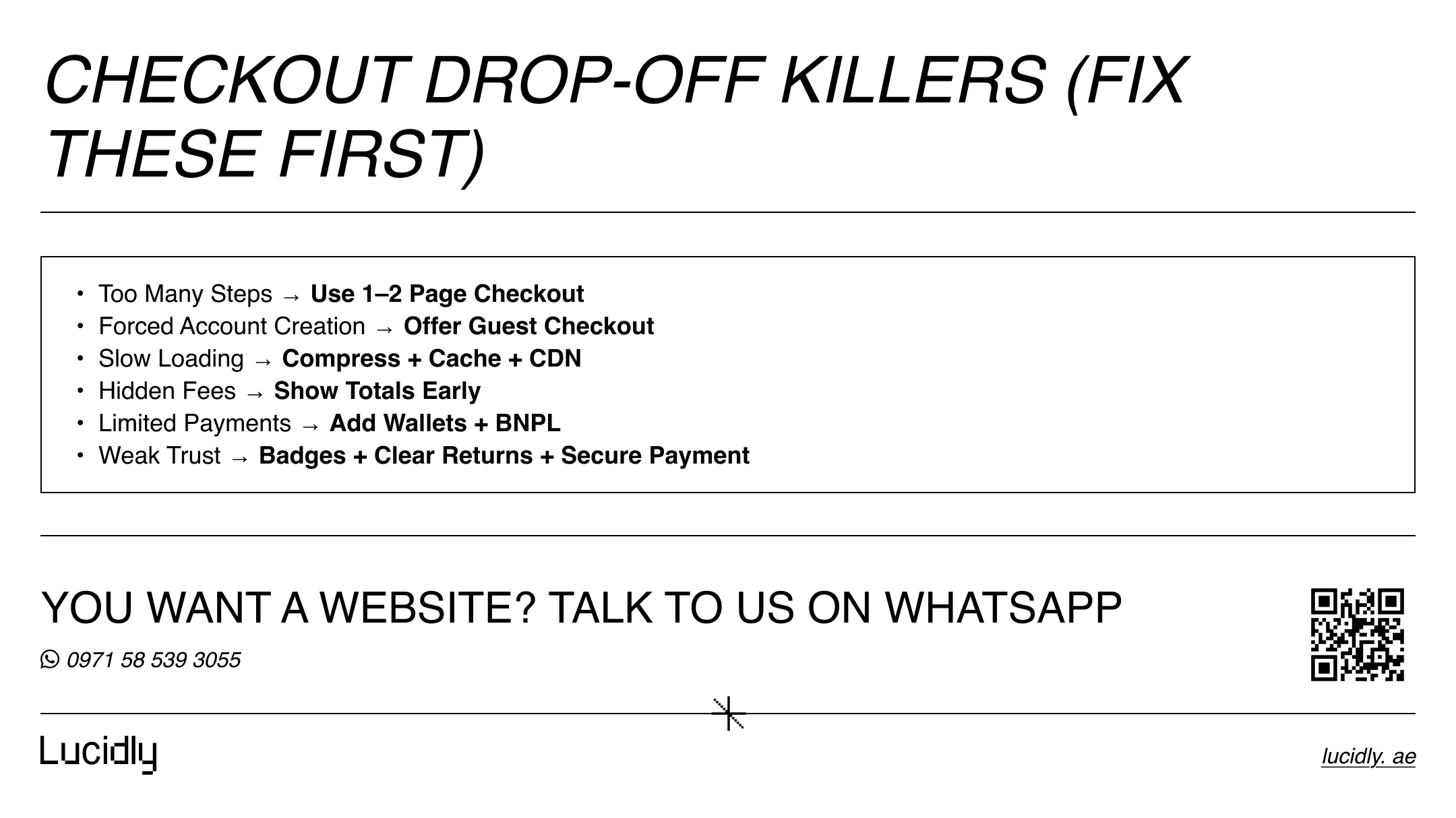
Essential checkout features:
SSL across all pages
Secure payment gateways (cards, wallets, BNPL)
PCI-compliant payment handling
Guest checkout option
For UAE stores, supporting local and regional payment methods significantly improves conversion rates.
Scalable Product and Inventory Management
As stores grow, manual processes break. Scalable ecommerce platforms must support:
Flexible product structures (variants, bundles)
Real-time inventory tracking
Automated stock updates
Integration with ERP or fulfilment systems
Scalability ensures your store can grow without constant rebuilds.
SEO-Friendly Architecture
Strong ecommerce web development supports search visibility from day one.
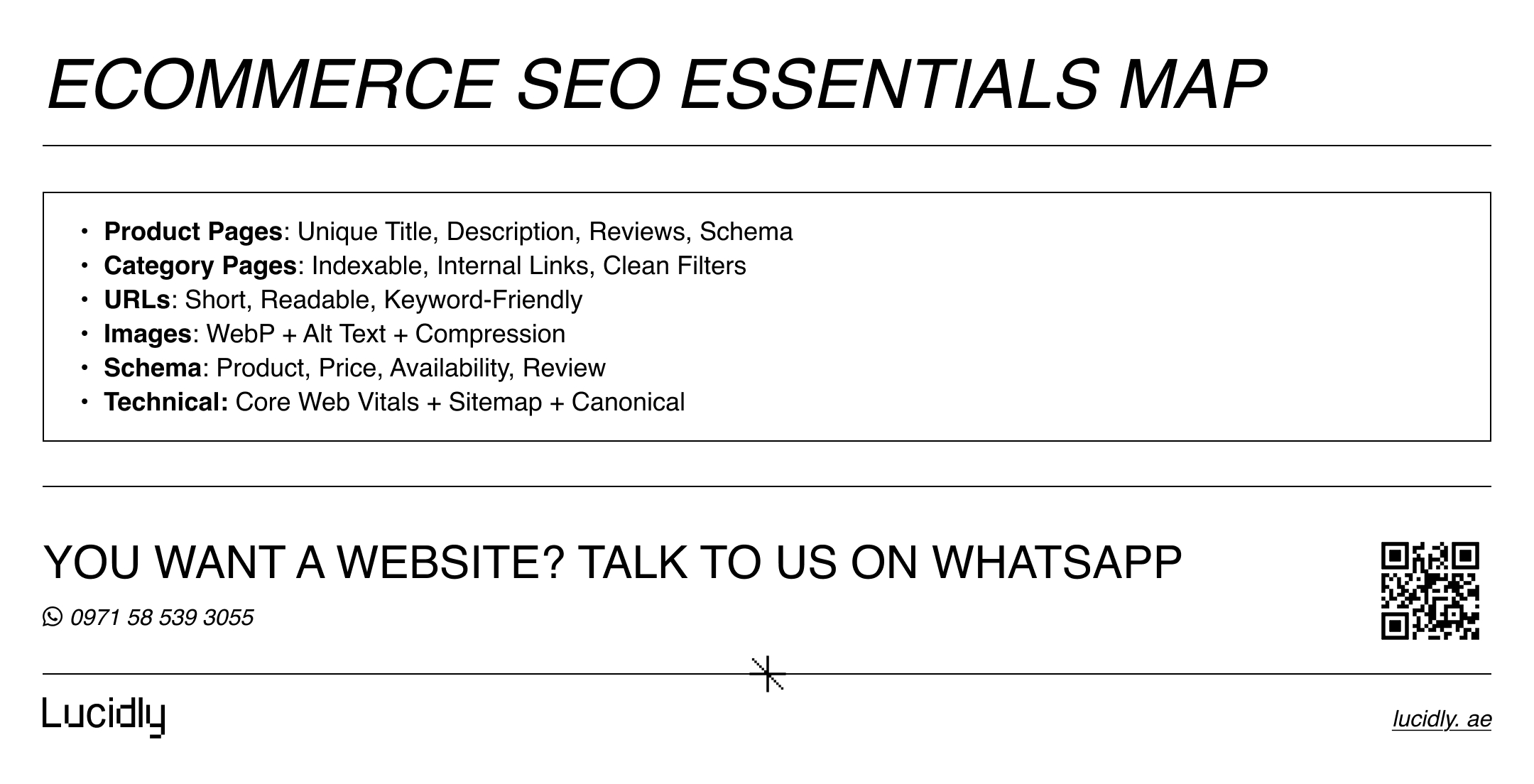
SEO-critical features include:
Clean, crawlable URLs
Editable meta titles and descriptions
Indexable category and product pages
Structured data (Product, Review, Price schema)
Optimised pagination and filters
Without technical SEO support, even great products struggle to rank.
User Accounts and Personalisation
Modern online stores benefit from personalised experiences that increase retention.
Key account features:
Secure login and account management
Order history and tracking
Saved addresses and payment preferences
Personalised recommendations
These features improve customer lifetime value and repeat purchases.
Reliable Hosting and Infrastructure
Your hosting setup is part of ecommerce web development, not an afterthought.
Reliable infrastructure includes:
Cloud-based hosting
Automatic scaling during traffic spikes
Regular backups
High uptime and monitoring
This is especially important during sales, promotions, and seasonal demand.
Platform choice matters long term. This comparison of custom websites vs WordPress vs builders for UAE companies breaks down flexibility, control, and growth limitations.
Ecommerce Platforms and Development Approaches
Custom vs Platform-Based Development
There is no single “best” approach to ecommerce web development.
Platform-based (e.g. Shopify, WooCommerce):
Faster to launch, easier to manage, ideal for many SMEs.Custom or headless ecommerce:
More flexibility, performance, and control for complex or large-scale stores.
The right choice depends on budget, complexity, and growth plans.
UAE-Specific Considerations for Ecommerce Web Development
E-commerce stores targeting the UAE must address additional requirements:
Arabic language and RTL support
High performance expectations
Trust signals and local credibility
Secure handling of customer data
Compatibility with regional logistics and payments
Stores that ignore these factors often struggle to convert local users.
Common Ecommerce Development Mistakes to Avoid
Many online stores fail due to avoidable technical issues:
Overloading sites with unnecessary plugins
Ignoring mobile checkout optimisation
Poor security configuration
Weak SEO foundations
Choosing platforms that don’t scale
Avoiding these mistakes early saves significant time and cost later.
Ongoing care is just as important as launch. This guide to website maintenance and support services in the UAE covers updates, monitoring, and long-term stability.
Step-by-Step Checklist for Ecommerce Web Development
Before launching your store, confirm you have:
Fast, mobile-optimised pages
Secure and flexible checkout
SEO-ready product and category structure
Scalable inventory and order management
Reliable hosting and backups
Analytics and tracking in place
This checklist helps ensure your ecommerce website is ready for growth.
Ready to Build a High-Performance Website?
Turn strategy into results with Lucidly’s custom web development solutions — built for speed, SEO, and business growth.
👉 Book Your Web Development Consultation
FAQ
What is ecommerce web development?
Ecommerce web development is building and optimising an online store that can list products, process payments securely, manage orders, and scale with traffic.
What features does every online store need?
Every store needs fast performance, mobile-first UX, secure checkout, strong product search/filters, SEO-ready pages, and reliable order + inventory management.
What is the most important feature for conversions?
A fast, trusted checkout. Reduce steps, offer guest checkout, support local payment methods, and keep pages mobile-optimised to prevent drop-offs.
How do I make an e-commerce website SEO-friendly?
Use clean URLs, unique titles/meta, indexable category/product pages, Product schema, optimised images, and controlled faceted filters to avoid duplicate pages.
Which payment options matter most in the UAE?
Support major cards, wallets, and popular regional options where possible. The key is secure, frictionless payments with clear trust signals and refunds/returns info.
Successful ecommerce web development is about building a store that performs, converts, and scales—not just one that looks good.
By focusing on speed, security, mobile experience, SEO, and infrastructure, businesses can create online stores that compete effectively in the UAE market.
Contact us — or message Lucidly on WhatsApp for a focused ecommerce and technical SEO review—so you can identify performance gaps and fix them before they impact sales.
References
Google Developers – E-Commerce & Web Performance
Shopify – E-Commerce Website Features Guide
MDN Web Docs – Web Development Fundamentals