Search engine optimization has evolved dramatically, yet seo myths continue to shape decisions, budgets, and expectations—often in the wrong direction.
From promises of instant rankings to outdated optimization tactics, misinformation still circulates widely across blogs, agencies, and social media.
In today’s search landscape, success isn’t built on shortcuts or secrets. It’s built on clarity, relevance, trust, and consistency.
This guide breaks down the most common SEO misconceptions and explains what truly matters for ranking today—so you can invest in strategies that deliver sustainable results.
What Really Matters for Ranking Today
Before debunking individual myths, it’s important to establish the foundations that modern search engines actually reward.
These principles apply regardless of industry, location, or competition level—and they are especially relevant for businesses targeting competitive markets like the UAE.
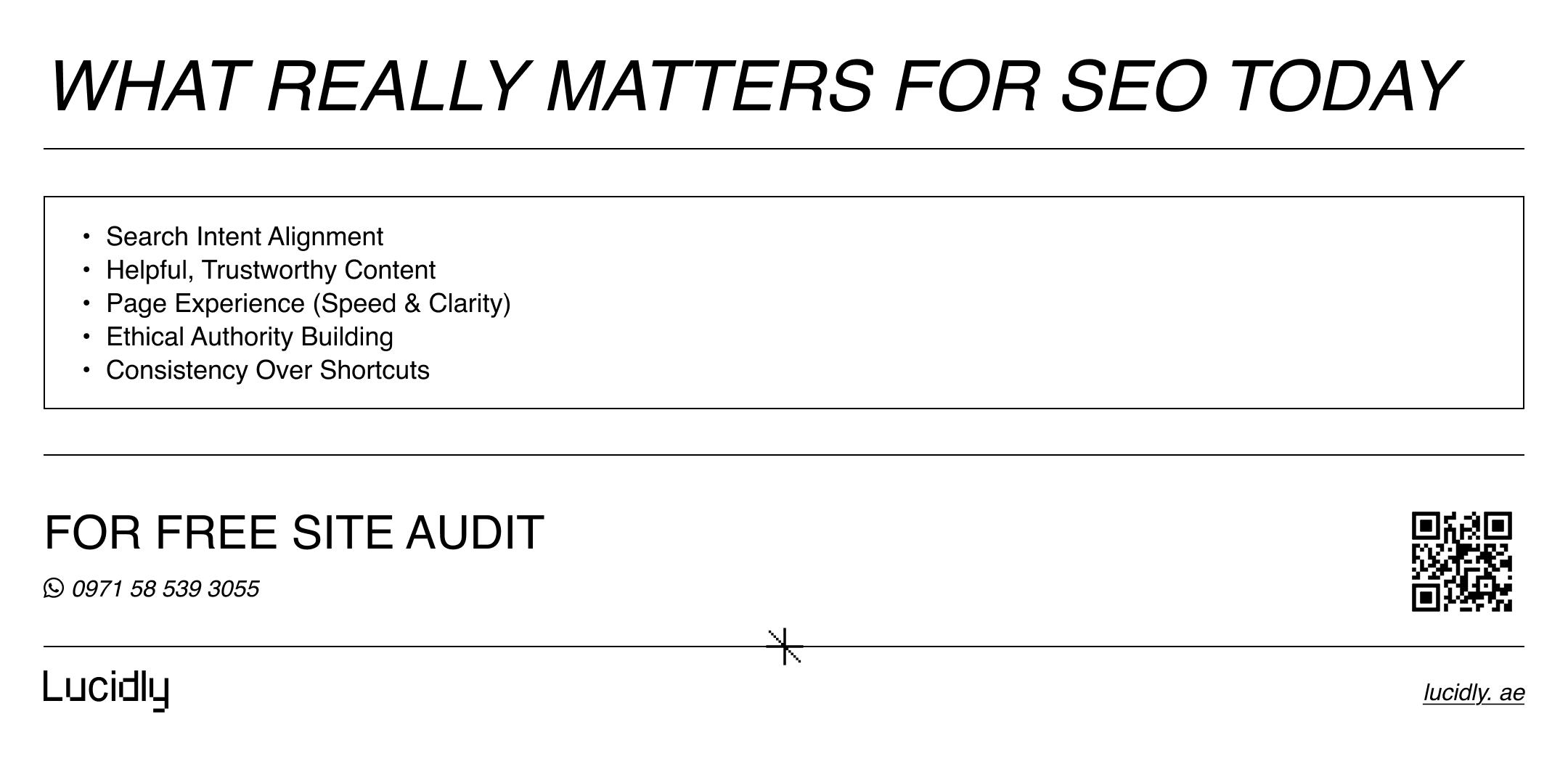
Search Intent Is the Core Ranking Signal
Every search query carries intent: to learn, to compare, or to act. Google’s primary goal is to match that intent as accurately as possible.
Pages that rank well today are not the ones that repeat keywords most often—they are the ones that best satisfy the user’s underlying need.
Understanding intent means analyzing search results, content formats, and the type of answers Google already priorities.
When intent is aligned, rankings follow naturally.
Helpful Content and Trust Signals Matter More Than Ever
Modern SEO is shaped by content that demonstrates real value, credibility, and experience. Google’s algorithm updates increasingly reward pages that are genuinely helpful, well-structured, and trustworthy.
This includes:
Clear authorship and brand identity.
Updated, accurate information.
Logical structure and readability.
Evidence of expertise and experience.
These factors separate long-term visibility from short-lived wins driven by outdated seo tactics.
Authority Without Risk Is the Sustainable Path
Authority still matters—but not through manipulation. High-quality backlinks, brand mentions, and digital PR build credibility when earned naturally.
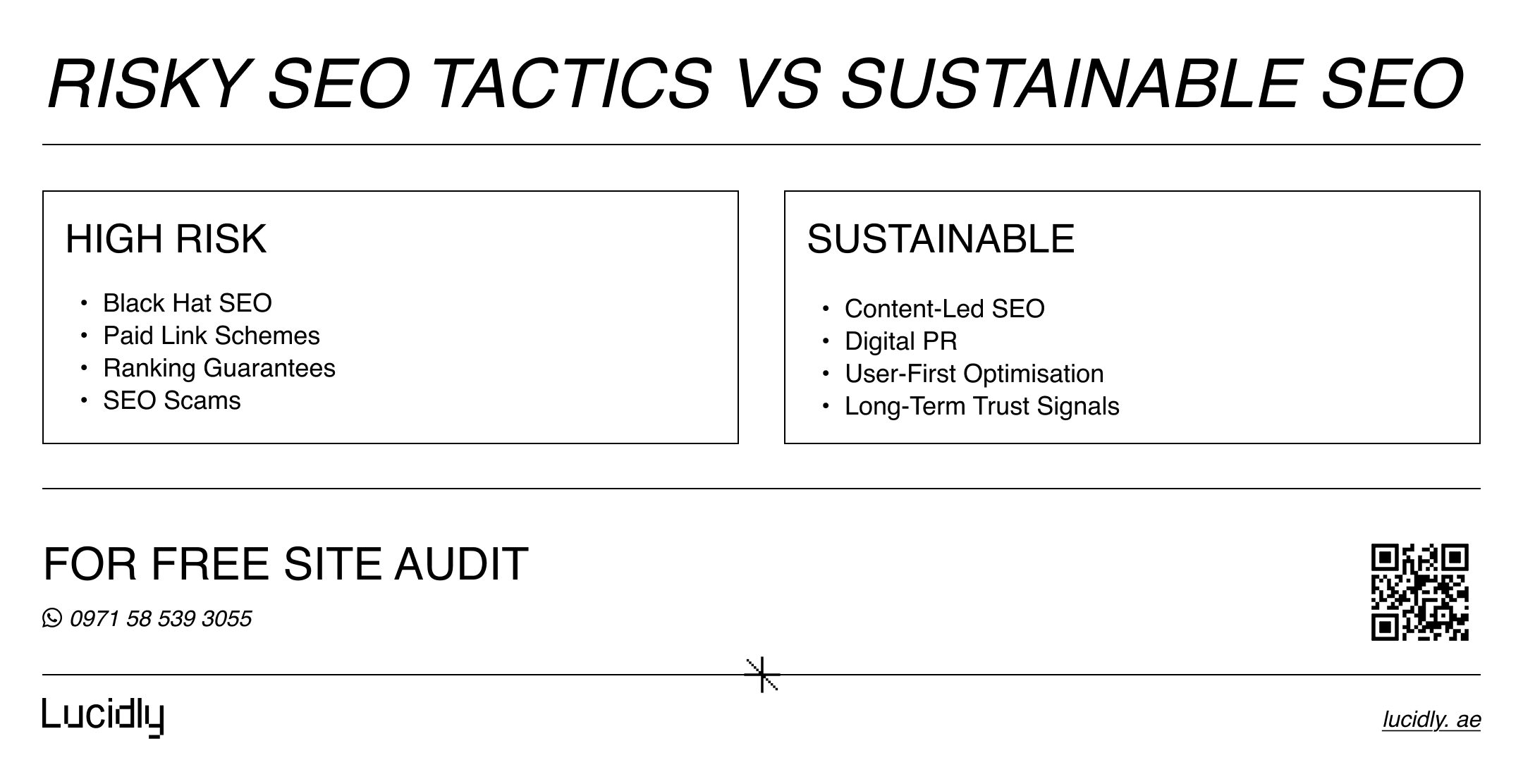
Risky shortcuts associated with black hat seo may deliver temporary spikes, but they often result in long-term ranking loss, reputational damage, and wasted investment.
Myth #1: “SEO Is Dead”
SEO isn’t dead—it’s simply less forgiving of shortcuts. Each time Google rolls out major updates, the tactics that relied on loopholes lose power, so people assume “SEO stopped working.
” In reality, what stopped working is outdated optimization. Modern SEO is about matching search intent, proving trust, and delivering a fast, clear experience—especially on mobile.
If your content genuinely answers the query better than competitors, updates often become an advantage, not a threat.
The Reality: SEO Has Evolved, Not Disappeared
SEO isn’t dead—it has matured. What stopped working were manipulative tactics designed to game the system. What works now is alignment: between content, intent, and user experience.
Businesses that adapt to modern SEO best practices continue to grow their organic visibility, leads, and revenue. Those relying on outdated assumptions are the ones struggling.
SEO today rewards clarity over tricks.
Myth #2: “Keyword Density Is the Ranking Secret”
The keyword density myth remains surprisingly popular, despite years of evidence proving it wrong.
Modern search understands context, so repetition isn’t proof of relevance. Clear coverage, natural phrasing, and topic depth outperform any keyword-density target.
The Reality: Over-Optimization Hurts Performance
Repeating keywords excessively does not improve rankings. In fact, it often:
Reduces readability.
Signals low-quality content.
Creates an unnatural user experience.
if you wondering how search engine work, here’s the answer: Search engines understand language far better than they used to. They recognise context, synonyms, and topic depth without needing forced repetition.
What Works Instead
Successful pages use natural language, semantic variations, and comprehensive topic coverage. This approach supports relevance without sacrificing clarity—an essential balance in modern SEO.
and you can do that with on-page seo basics, learn it now.
Myth #3: “Buying Links Is a Safe Shortcut”
Many SEO scams are built around this promise: buy links, rank faster.
The appeal is obvious: links have long been a ranking signal, so paying for them sounds like a shortcut.
However, most paid link schemes fall under black hat SEO and are designed to manipulate authority rather than earn it.
Google’s spam systems are specifically built to detect unnatural link patterns, and while some sites may see short-term gains, the long-term risk is significant.
Once trust is lost, recovering rankings can take months—or longer.
you can learn more about healthy link building that with us in off-page seo and authority.
The Reality: Risky Links Undermine Long-Term Growth
Paid links, private networks, and automated outreach fall squarely under black hat seo tactics. While they may create short-term movement, they often lead to penalties or suppressed visibility after future Google algorithm updates.
The Safer Alternative
Authority should be earned through:
High-quality content that attracts citations by doing keyword research the right way.
Digital PR and media coverage.
Relevant partnerships and mentions.
This approach builds trust without exposing your site to unnecessary risk.
Myth #4: “Anyone Can Guarantee a #1 Ranking”
Ranking guarantees often rely on vague definitions (“top 3” for a few low-competition keywords) or short-term tactics that don’t survive the next Google algorithm updates.
No one controls rankings because results shift based on competitors, intent changes, location, personalisation, and ongoing quality signals.
When an agency promises #1, the real risk is what they’re willing to do behind the scenes—often aggressive link schemes, thin content, or other SEO scams.
A trustworthy partner will talk about measurable growth (traffic, qualified leads, conversions), realistic timelines, and transparent work—not guarantees.
The Reality: Ranking Guarantees Are Not Legitimate
No seo agency or consultant controls Google’s algorithm. Promises of guaranteed #1 positions ignore variables such as competition, intent shifts, and ongoing algorithm changes.
In practice, ranking guarantees often indicate:
Aggressive or unsafe tactics.
Misleading reporting.
Unrealistic timelines.
Professional SEO focuses on measurable growth, not fixed promises.
Myth #5: “I Must Submit My Website to Google Manually”
In reality, Google discovers most websites automatically through links across the web. Manually submitting a site does not improve rankings or speed up visibility if the site lacks clear structure or internal links.
What actually matters is making your pages easy to crawl and understand—using proper internal linking, an XML sitemap, and Google Search Console to monitor indexing issues. When discovery works as intended, manual submission becomes unnecessary.
The Reality: Discovery Is Automatic—Signals Matter More
Google discovers most websites automatically through links. Manual submission is rarely required.
What does matter is:
Google Search Console setup.
XML sitemaps.
Strong internal linking.
Submitting a site manually doesn’t compensate for poor structure or weak content.
Myth #6: “Algorithm Updates Mean Starting Over”
In most cases, algorithm updates don’t require rebuilding everything from scratch. They are designed to refine how Google evaluates relevance, quality, and trust—not to punish sites that follow best practices.
Pages are usually affected because of mismatched search intent, thin or outdated content, or weak trust signals.
When updates roll out, the smartest response is to analyse what changed, improve clarity, update information, and strengthen user experience. For well-aligned sites, updates often reinforce visibility rather than disrupt it.
The Reality: Updates Reward Better Alignment
Most google algorithm updates are refinements, not resets. They aim to surface content that better matches intent, quality, and trust.
When rankings drop, the solution is rarely rebuilding everything. Instead, it’s about:
Improving content depth.
Clarifying intent.
Enhancing user experience.
Strengthening trust signals.
Sites that follow SEO truths consistently tend to benefit from updates rather than suffer from them.
Myth #7: “SEO Is Just a Technical Exercise”
Technical seo optimisation lays the foundation for SEO, but it cannot compensate for weak content or poor positioning.
A technically perfect site with unclear messaging, shallow pages, or mismatched intent will still struggle to rank.
Modern SEO works as a system: technical health enables discovery, content delivers value, and authority builds trust.
When these elements are aligned, rankings become more stable and scalable—especially in competitive markets.
The Reality: SEO Is a Strategic System
Technical SEO creates the foundation, but it cannot compensate for weak content or poor positioning. True SEO success comes from balancing:
Technical health.
Helpful, intent-driven content.
Authority and credibility.
Ignoring any one of these limits performance.
What Actually Works: A Practical SEO Checklist
To move beyond seo facts vs myths, focus on actions that consistently deliver results.
Before applying advanced tactics, ensure these fundamentals are in place:
Clear page purpose aligned with search intent.
Logical heading structure (H1–H3).
Fast loading and mobile-friendly design.
Updated, accurate content.
Internal links that guide users naturally.
Trust signals (about pages, authorship, contact info).
These modern seo best practices form the baseline for sustainable rankings.
(FAQ)
What are the biggest SEO myths?
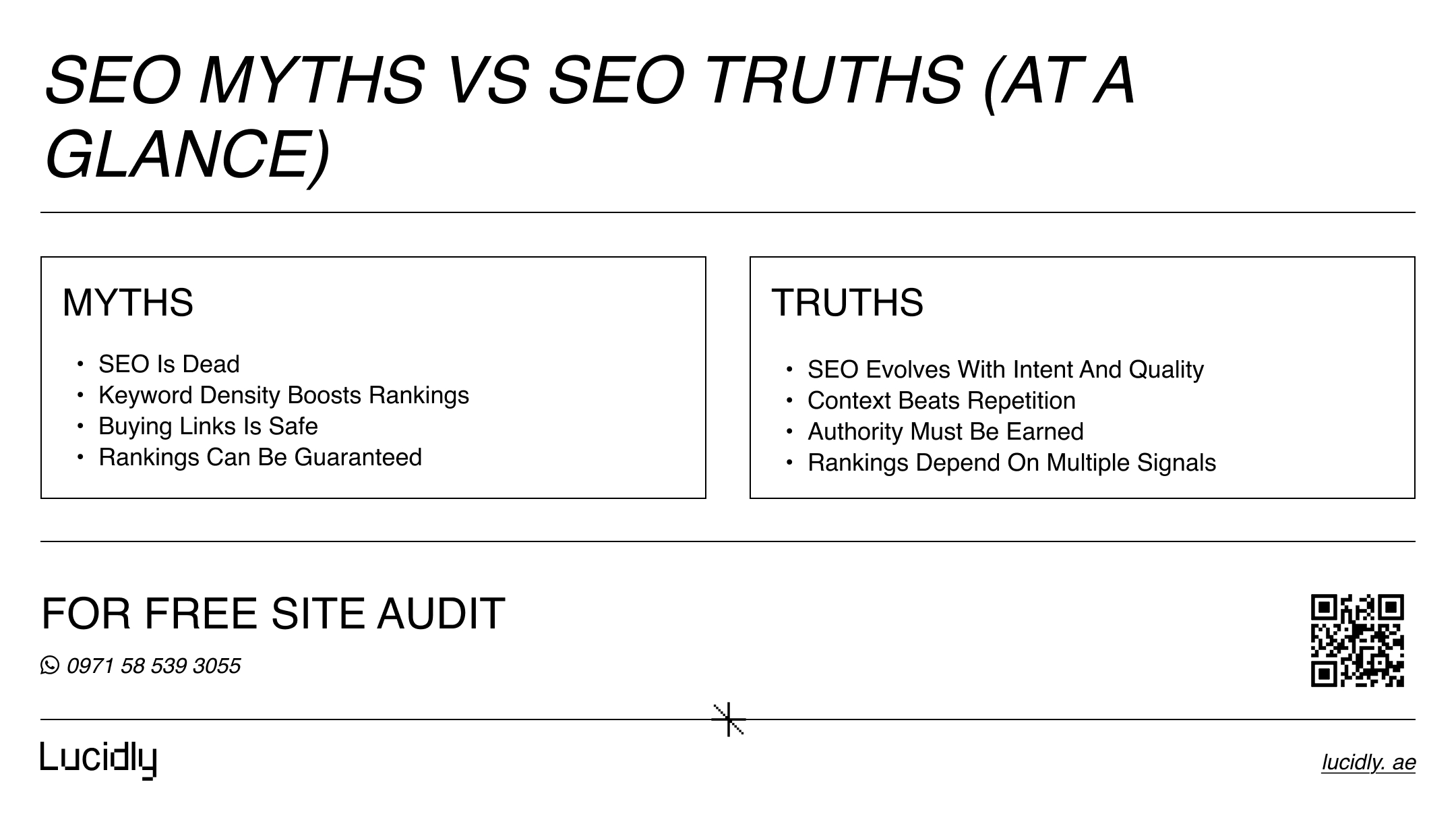
The biggest SEO myths include the belief that SEO is dead, that keyword density drives rankings, that buying links is safe, and that rankings can be guaranteed. Each of these misconceptions distracts from strategies that actually work today.
Is SEO dead?
No. SEO has evolved alongside search engines. It now focuses on intent, content quality, trust, and user experience rather than manipulation or shortcuts.
Do I need to submit my site to Google?
In most cases, no. Google discovers sites automatically. Using Google Search Console, maintaining a sitemap, and ensuring strong internal linking are far more important.
Can anyone guarantee a #1 ranking on Google?
No. Any promise of guaranteed rankings is misleading and often associated with risky or unethical practices.
Believing outdated seo myths leads to wasted budgets, missed opportunities, and unstable results. Sustainable visibility comes from understanding how search engines evaluate relevance, trust, and usefulness today.
When you focus on intent-driven content, ethical authority building, and consistent optimization, rankings become a byproduct—not a gamble.
The brands that win in modern SEO are the ones that invest in what truly matters and leave myths behind.
Contact us for an SEO myths audit—message us on WhatsApp and we’ll review your current strategy, spot what’s outdated, and give you a clear plan that actually drives rankings.
References
1. Google Search Central
Creating Helpful, Reliable, People-First Content
2. Google Search Central
Link Spam Update & Spam Policies